There are two main types of solar energy solutions: Off-Grid, and Grid-Tied. While it is quite simple, we’ll go into a bit of detail on what it is that sets the two systems apart.
Off-Grid:
Exactly as the name suggests, Off-Grid systems are totally independent of the power grid. Although this sound ideal, it is expensive. You need to be sure that your system can supply 100% or more of the power you need. Furthermore, you need to invest in an energy storage solution. Basically, a big battery bank. You will need to over-cater PV panels, to ensure that even on the darkest of days you have enough power. But if you can afford it, an Off-Grid system is great!
You will never have a power bill to worry about. You will also never need to worry about power outages again. Above all, you will forget about load shedding!
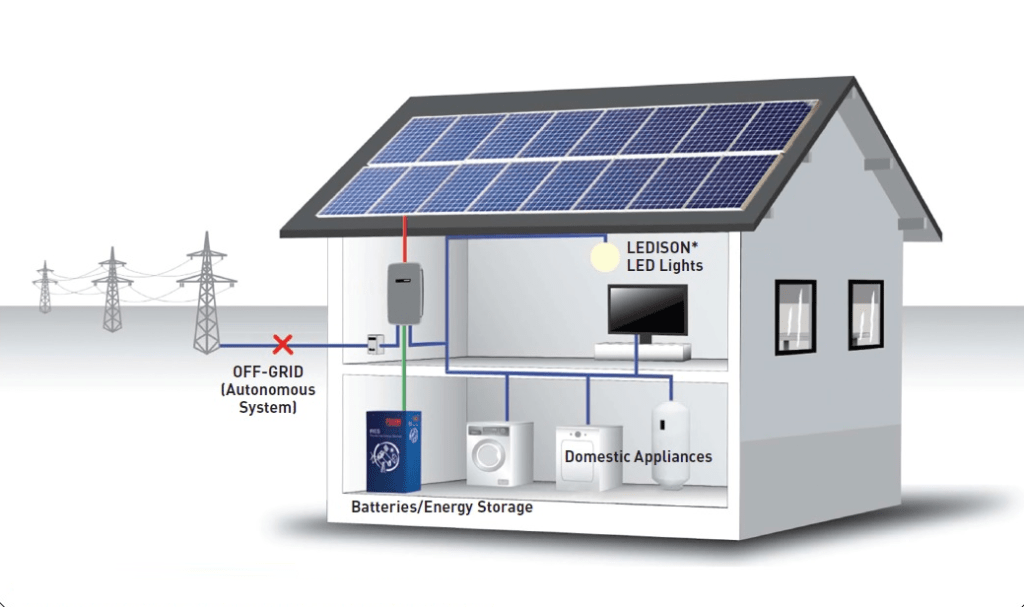
The basic layout of an off-grid solar system.
Grid-Tied:
Grid-Tied systems are great for cost saving, while still being able to fall back on the grid. During the day, the system relies on the PV panels to provide energy. However at night, you can draw energy from the grid. Unless you have a large energy storage solution and a big inverter, you need the grid. Many Grid-tied options allow for a battery bank. Meaning you have the luxury of using solar during the day, and using battery power when Eskom strikes. This way you get the stability of an off-grid system, with less batteries.
The downside of this setup is that your inverter may not be big enough to handle bigger loads, such as heaters and multiple kettles. Additionally you will need a gas stove and oven, for a full back-up solution. Geysers also draw a massive load. Therefore you may want to look at a gas or solar geyser.
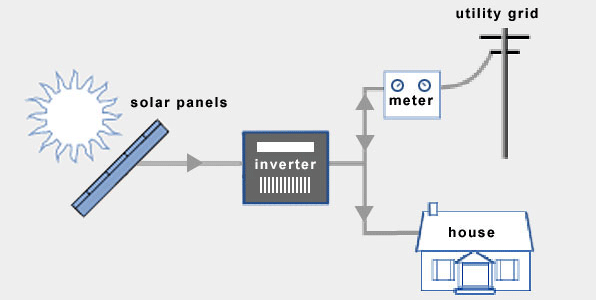
With a Grid tied solar system, the inverter only draws from the grid as much as necessary.
We hope this article helps you decide what type of system you would like, should you have any further questions please get hold of one of our experts.